1
Tuxedo
Tuxedo Club, New York · 1890s
The Martini before it settled down. At the Tuxedo Club, the Gilded Age country retreat that also gave the dinner jacket its American name, members drank a sharper, stranger cousin of the dry Martini. First written down in 1900, lifted by a whisper of absinthe and, depending on the bartender, a touch of maraschino. Dry, saline, faintly herbal. This is roughly where the Martini we know begins.
4
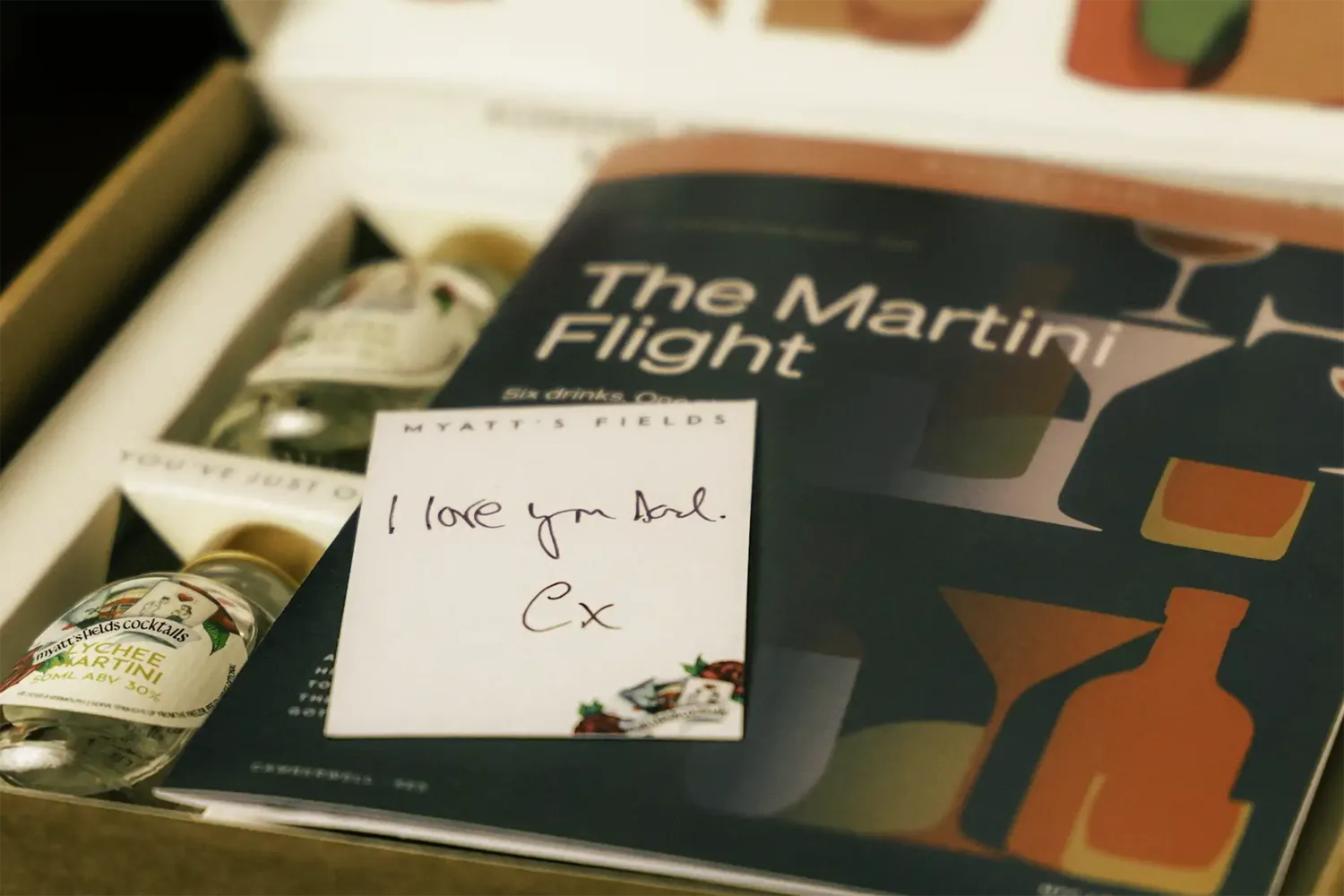
Lychee Martini
New York · early 1990s
The Martini becomes a category. In the Asian-fusion boom of early-nineties New York, the coupe stopped belonging to gin. A sake bar, a Korean kitchen and a fusion dining room all have a claim to the first lychee Martini. What they share is the moment the glass opened up to anything floral and served straight up. Ours takes a dash of lychee, not a slug. Floral, and only just sweet.
2
Gibson
New York or San Francisco · ~1908
The Martini learns to be savoury. Nobody agrees who first asked for an onion in place of an olive. A New York illustrator and a San Francisco businessman, both called Gibson, both with a claim. The first one dates to 1908, but the pickled onion that now defines it was not fixed for decades after. We infuse ours with pickled onion, so the savoury edge is there the moment the bottle leaves the freezer.
5
Pisco Martini
Leyenda, Brooklyn · 2015
The Martini goes looking for new spirits. When Ivy Mix opened Leyenda, her Latin American bar in Brooklyn, she rebuilt an earlier pisco Martini in fourths: gin and pisco, sweet vermouth and dry. She called it the En Cuarto. Pisco, the grape brandy of Peru and Chile, brings warmth and a faint must of fresh fruit. Ours is a take on hers, under a plainer name.
3
Vesper
Casino Royale · 1953
The Martini enters fiction. Ian Fleming wrote the Vesper for James Bond before any bartender had made one. Gin, vodka, and an aromatised wine where the vermouth should be. We blend Lillet Blanc and Cocchi Americano in place of the Kina Lillet that Fleming knew, now long discontinued, with London Dry gin and our own vodka. Rounder and more floral than a Martini, with a clean, honeyed lift.
6
Sakura Martini
Bar Goto, New York · 2015
The Martini, turned around. At Bar Goto on the Lower East Side, Kenta Goto built a Martini where sake leads and gin follows, lifted by a touch of maraschino and finished with a salted cherry blossom where the olive once sat. Delicate, saline, gently floral. The Martini handed to another tradition, and handed back changed.